NASA Brings a Flying Laboratory to Panama
Not every important story about Panama begins with trade, infrastructure, or finance. Some begin in the air.
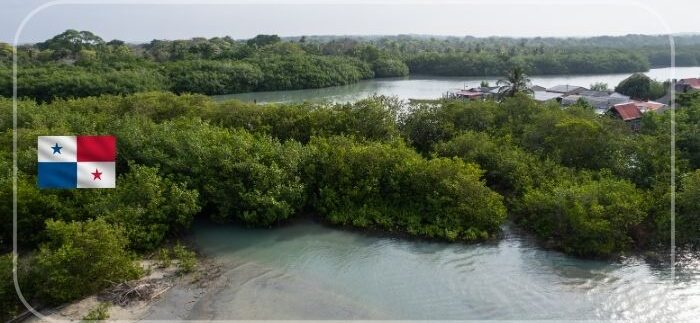
This week, NASA arrived in Panama with a research aircraft as part of a mission focused on studying the country’s biodiversity. Working alongside the Smithsonian Tropical Research Institute, the team will use advanced technology to observe and measure ecosystems across the country, from dense forests to coastal environments.
On one level, it is a scientific mission. On another, it reflects something larger about Panama’s place in the world.
Countries do not attract this kind of institutional attention by accident. Panama’s geography, ecological diversity, and strategic location continue to make it relevant not only as a logistics and financial hub, but also as a place of global scientific interest.
The visit also carries an educational dimension. In addition to the research itself, the mission is expected to include exchanges with students, teachers, and local institutions, helping connect international science with a new generation in Panama.
For a country that continues to expand its role on the global stage, this kind of presence matters. It shows that Panama’s importance is no longer defined only by the Canal or by its position between continents. It is also becoming a place where research, education, and international collaboration intersect.
That adds another layer to the country’s international profile.
Panama has long been understood as a bridge. What missions like this suggest is that it is also becoming a platform for deeper forms of global engagement, including science, innovation, and environmental leadership.