Chiquita Returns to Panama: A Boost for Jobs, Exports, and Investor Confidence
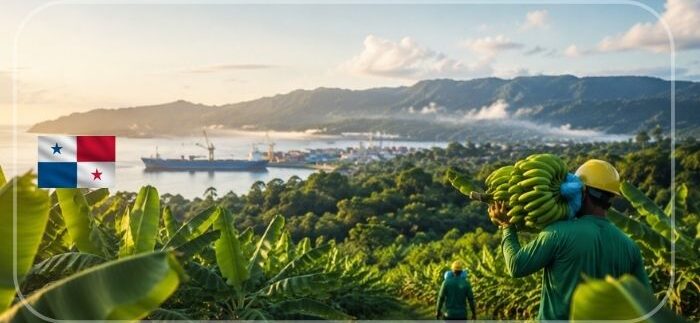
Chiquita’s return to Panama is more than a corporate restart. It is a major economic rebound for Bocas del Toro and one of the country’s most important agricultural export sectors.
After suspending operations during a labor conflict in 2025, Chiquita reached an agreement with the Government of Panama to return with an initial investment of approximately $30 million and a phased plan to restore up to 5,000 jobs.
The comeback will be anchored in Bocas del Toro, where Chiquita is reactivating production across approximately 5,000 hectares of banana farmland. Its Panama operations are centered around the province’s traditional banana corridor, including areas such as Changuinola and Almirante, where the company’s local presence has historically supported farming, logistics, port activity, and thousands of families.
The impact of the shutdown was dramatic. Chiquita had dismissed roughly 5,000 workers out of a 6,500-person workforce, meaning nearly 77% of its local employees were affected during the disruption. The company also reported at least $75 million in losses, underscoring the scale of the halt.
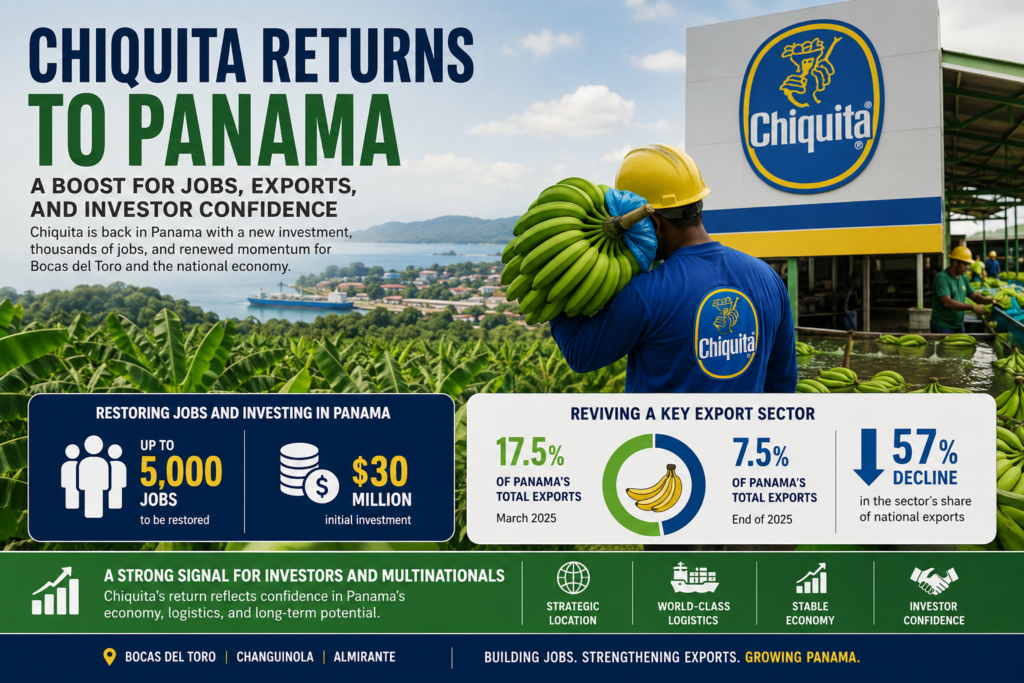
Banana exports also fell sharply, with the sector dropping from 17.5% of Panama’s total exports in March 2025 to approximately 7.5% by the end of the year. That represents a decline of about 57% in the sector’s share of national exports, a powerful reminder of how important banana production remains to Panama’s trade economy.
While Chiquita’s return may not dramatically shift Panama’s national GDP on its own, its regional economic impact could be substantial. The restart brings back thousands of direct jobs, restores one of the country’s most important agricultural export chains, and creates a multiplier effect across transportation, port activity, packaging, maintenance, fuel, food, housing, and local commerce.
For Bocas del Toro, this is not just a corporate comeback. It is a meaningful step toward economic recovery.
For Panama, the bigger story is one of renewed confidence. A major international company is returning, thousands of jobs are being restored, and one of the country’s most historic agricultural industries is being rebuilt.
For investors and multinational companies, Chiquita’s return sends an important signal: Panama remains a market where international companies can restart, scale, and operate long term. While the direct impact is concentrated in Bocas del Toro, the broader message is relevant for anyone watching Panama’s investment climate. New capital, job creation, export recovery, and corporate reactivation all point to confidence in the country’s labor market, logistics network, agricultural export capacity, and overall business environment.
For multinational clients, this reinforces Panama’s role as a regional platform for trade, operations, and distribution. The country continues to offer strategic access to global shipping routes, strong air connectivity, port infrastructure, and a dollarized economy, factors that remain highly attractive for companies managing regional or international business.
For real estate investors, the connection is indirect but important. Employment growth, foreign investment, export activity, and corporate confidence all support the broader economic fundamentals that drive housing demand, relocation, rental activity, and long-term investment interest in Panama.
Chiquita’s comeback is ultimately a reminder that Panama’s economy is not built on one sector alone. Beyond banking, logistics, tourism, and real estate, the country also maintains productive industries that create employment and support regional growth. For investors, that diversification matters.
At a time when Panama continues to strengthen its position as a logistics, trade, and investment hub, Chiquita’s return sends a positive signal: global companies still see long-term value in operating from Panama.
Things You Should Know
-
What happened with Chiquita in Panama? Chiquita suspended operations in 2025 during a labor conflict that disrupted banana production in Bocas del Toro. The company later reached an agreement with the Government of Panama to return and reactivate operations.
-
Why did Chiquita leave Panama? Chiquita suspended activities after a labor conflict affected its operations. The shutdown led to major job losses, production disruption, and reported company losses of at least $75 million.
-
Is Chiquita returning to Panama? Yes. Chiquita is returning with an initial investment of approximately $30 million and a phased plan to restore operations and jobs.
-
How many jobs will Chiquita restore? Up to 5,000 jobs are expected to be restored through the company’s reactivation plan.
-
Where will Chiquita operate in Panama? The company’s comeback will be anchored in Bocas del Toro, especially around Changuinola and Almirante, two areas historically connected to Panama’s banana industry.
-
How does this affect Panama’s economy? The national GDP impact will likely be modest, but the regional effect could be significant. The return supports employment, exports, logistics, local commerce, and supply chains connected to the banana industry.
-
Why does this matter for investors? Because Chiquita’s return signals renewed corporate confidence in Panama. It shows that international companies continue to see value in Panama’s logistics network, labor force, export capacity, dollarized economy, and regional business platform.
-
Why does this matter beyond Bocas del Toro? Because the banana industry supports more than farms. It connects to transportation, ports, packaging, fuel, maintenance, housing, food services, and broader confidence in Panama’s investment environment.