Panama Canal Traffic Climbs as Global Shipping Routes Shift
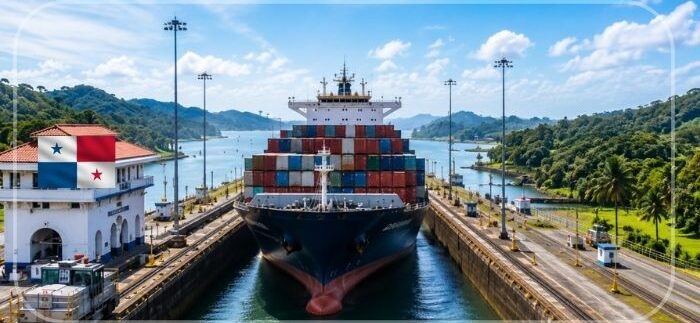
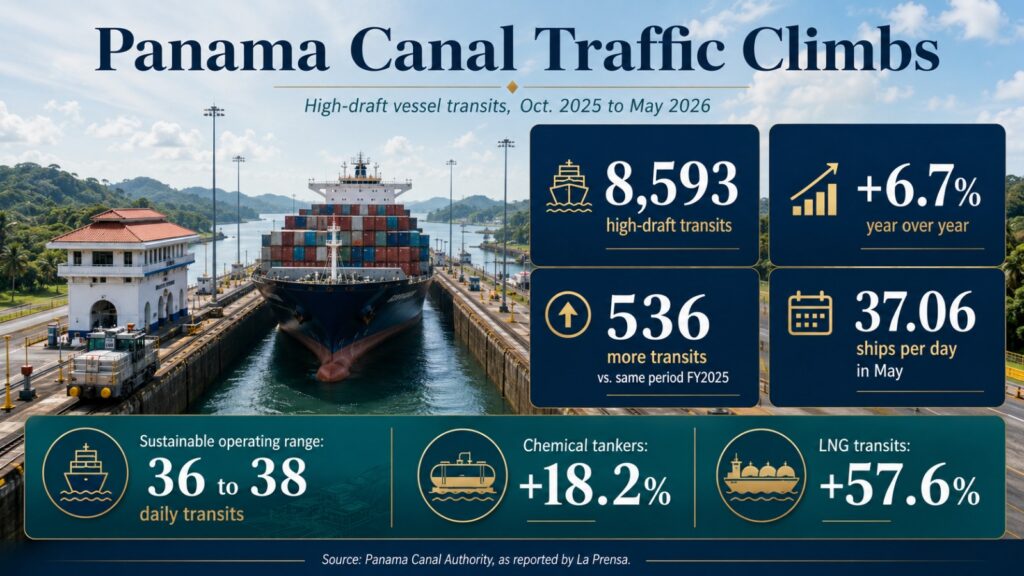
The Panama Canal accumulated 8,593 high-draft vessel transits between October 2025 and May 2026, according to figures reported by La Prensa based on data from the Panama Canal Authority. That represents 536 more transits than the same period of fiscal year 2025, when the Canal recorded 8,057 crossings.
The most important comparison is daily capacity. In May, the Canal averaged 37.06 ocean-going vessels per day, close to its estimated sustainable operating range of 36 to 38 daily transits. In other words, traffic is not only improving. The Canal is operating near its practical daily rhythm.
This matters because the recovery is happening while global shipping is adjusting to new pressures. Container ships remain the largest segment, with 1,921 accumulated transits, but the stronger story is the diversification of cargo. Chemical tankers rose 18.2% year over year, while LNG transits increased 57.6%, although from a smaller base.
The Canal’s administration has also moved to calm concerns about future restrictions. In an official update, the Panama Canal stated: “Current data does not forecast the need for transit restrictions through December 31, 2026.” The Canal also said it continues to maintain 38 daily transits while monitoring lake-level projections weekly.
For investors and multinational companies, this is the real takeaway: Panama’s logistics platform remains resilient. A stronger Canal supports ports, warehousing, shipping services, banking, insurance, regional headquarters, and trade-related businesses. It also reinforces Panama’s broader value proposition: strategic location, dollarized economy, air connectivity, and infrastructure built around global commerce.
The Canal’s performance is more than a maritime statistic. It is a signal that Panama continues to function as one of the most important connectors in global trade.
5 Things You Should Know
-
Is Panama Canal traffic rising again? Yes. The Canal recorded 8,593 high-draft vessel transits between October 2025 and May 2026, up 6.7% year over year.
-
Is the Canal operating close to capacity? Yes. In May, the Canal averaged 37.06 ships per day, close to its estimated sustainable operating range of 36 to 38 daily transits.
-
Which cargo segments are growing? Container ships remain the largest segment, but chemical tankers grew 18.2% year over year, while LNG transits increased 57.6% from a smaller base.
-
Are new transit restrictions expected? Not for now. The Panama Canal says current data does not forecast the need for transit restrictions through December 31, 2026, while it continues monitoring water levels.
-
Why does this matter for investors and multinational companies? Because a stronger Canal supports Panama’s broader logistics ecosystem, including ports, warehousing, financial services, shipping, insurance, corporate operations, and regional trade.