Panama City’s Next Transformation Is Happening at Street Level
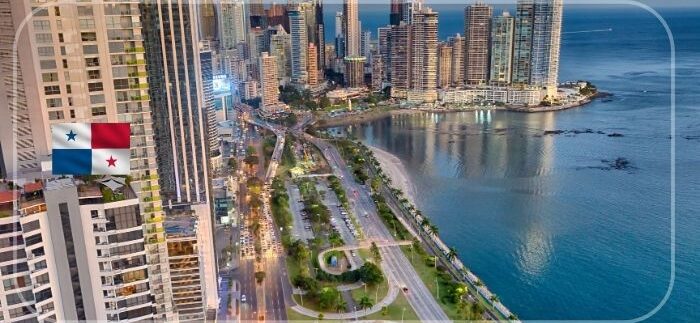
For decades, Panama City’s transformation has been measured by its skyline. The next stage may be easier to see from the sidewalk.
A series of municipal projects is beginning to address the spaces between the buildings: sidewalks, parks, commercial corridors, transportation connections and public access to the waterfront. At the center of this emerging vision is a proposed renovation of Plaza de la Democracia in Paitilla, supported by related plans for Calle 50, Vía Brasil, 5 de Mayo, Avenida 3 de Noviembre and several central neighborhoods.
Individually, these projects respond to specific problems. Together, they suggest that Panama City is beginning to treat its streets and public spaces as connected urban infrastructure.
A New Waterfront Park for Paitilla
The Municipality of Panama has presented a plan to renovate Plaza de la Democracia, the public space commonly known as Parque de Paitilla.
The estimated $15 million project would cover approximately 1.2 hectares and include expanded green areas, pedestrian paths, bicycle infrastructure, viewpoints overlooking the bay and underground parking for around 90 vehicles. The proposal also incorporates rain gardens, permeable surfaces and rainwater collection systems.
These elements matter in a dense coastal neighborhood. A municipal planning study estimates that San Francisco has approximately eight square meters of green space per resident, below the 10 to 15 square meters referenced as an international planning benchmark in the same document. Plaza de la Democracia is one of the relatively few neighborhood-scale public spaces serving the Paitilla area.
The project received community support during a public hearing held on Aug 5, 2026, and the Municipality projects that work could begin in 2027.
That timeline should still be considered preliminary. A public hearing approves the project’s general direction, but it is not the same as awarding a construction contract. Detailed design, procurement, permits and an order to proceed would still be required.
The scale of the proposed investment is also significant. The existing plaza was inaugurated in 2013 at a reported cost of $1.6 million. It was officially named Plaza de la Democracia in 2015.
A $15 million intervention would therefore represent much more than a cosmetic renovation. The final documents will need to explain how the budget is divided among the underground parking, landscaping, drainage, structures, lighting and long-term maintenance.
Calle 50 Is Part of the Same Urban Conversation
The proposed transformation of Paitilla becomes more relevant when viewed alongside the plans for Calle 50, one of the capital’s principal financial and commercial corridors.
The Municipality originally issued an $8 million tender to renovate 1.7 kilometers of road between Avenida Federico Boyd and Vía Brasil. That proposal included continuous sidewalks, trees, pedestrian lighting, improvements to the preferential bus lane and a designated bicycle route, while maintaining the avenue’s existing vehicular capacity.
However, that first procurement process was subsequently removed from the 2026 Annual Works and Investments Plan, and the tender was reported as canceled. Calle 50 should therefore not be presented as one fully contracted renovation.
A separate proposal now covers approximately 2.29 kilometers from Vía Brasil to the waterfront. Estimated at around $8 million, this second section would include wider sidewalks, additional trees, modern lighting, improvements to parks and green areas, and the underground placement of utility cables in coordination with the public services authority. Residents approved the concept during a February 2026 public hearing.
If executed as planned, the eastern section of Calle 50 could create a stronger pedestrian connection between the city’s commercial core, San Francisco and the waterfront. It could also complement the future Plaza de la Democracia by making the surrounding district easier to navigate without relying exclusively on a car.
The important question is now one of continuity. Improvements will have their greatest value if the different sections of Calle 50, Vía Brasil and the waterfront are eventually connected through consistent sidewalks, crossings, shade and public transportation.
The Historic Center Is Receiving Its Own Network of Improvements
The same street-level strategy is appearing in Santa Ana and Calidonia.
The Municipality has published several major urban renovation projects:
-
Avenida 3 de Noviembre and its connection with the Cinta Costera have a reference budget of $7 million and an estimated construction period of 485 days.
-
The 5 de Mayo area has a reference budget of $7 million and a projected period of 667 days. The concept includes accessible sidewalks, new landscaping, public furniture and the reorganization of kiosks.
-
Calle Estudiante was awarded to Ingeniería REC, S.A. for approximately $2.56 million. Its planned improvements include better accessibility, pedestrian lighting, landscaping, public furniture and more orderly spaces for kiosks and small businesses.
These projects are moving through different stages, but they share a common objective: improving the connection between transportation hubs, commercial streets, Santa Ana, Calidonia and the entrance to the historic district.
This is especially important around 5 de Mayo, where Metro, bus, pedestrian and commercial activity converge. Improving the area is not only about appearance. Better crossings, lighting and sidewalks can support local commerce and make the route toward Santa Ana and Casco Antiguo more legible and comfortable.
Smaller Projects Can Complete the Network
Large renovations are only part of the municipal strategy.
The first phase of the pocket park program carries a reported investment of approximately $4.3 million and includes locations in Calidonia, Bella Vista, San Francisco, Pueblo Nuevo, Parque Lefevre, Río Abajo and Juan Díaz. The proposed parks generally occupy between 100 and 500 square meters, converting overlooked spaces into shaded areas for rest, circulation and community use.
Plans for Vía Brasil also include wider sidewalks, safer crossings, landscaping, universal accessibility and drainage improvements. In Carrasquilla, another proposal would improve the pedestrian route between the Fernández de Córdoba Metro station and Vía Porras through accessible sidewalks, trees, public furniture and small green spaces.
The Municipality has also introduced “Adopta tu Frente,” a program that encourages private businesses to rehabilitate sidewalks near their properties using municipal design guidelines. This type of partnership could help close gaps between larger public projects, provided that accessibility and design remain consistent across property lines.
From Individual Projects to a More Connected City
The broader opportunity is not any single park or avenue. It is the possibility of creating a continuous public realm.
A World Bank-supported concept for Panama City’s coastal area previously proposed connecting Plaza de la Democracia, Parque Nacho Valdés, Punta Pacífica and Boca la Caja through pedestrian and cycling routes, public spaces and waterfront facilities.
The current municipal projects do not yet deliver that entire vision, but they move in a similar direction. Plaza de la Democracia could strengthen the waterfront. Calle 50 and Vía Brasil could improve access from commercial and residential neighborhoods. Avenida 3 de Noviembre, 5 de Mayo and Calle Estudiante could create a better gateway to Santa Ana and the historic center. Pocket parks and neighborhood sidewalks could extend those improvements into everyday residential areas.
For residents, the benefits are straightforward: safer walking, more shade, better public spaces and improved access to transportation and recreation.
For businesses and real estate, a better public realm can support pedestrian activity, neighborhood appeal and longer visits to commercial districts. It should not be presented as a guarantee of higher property values, but it can improve the conditions that make an urban district more attractive and competitive.
The real measure of progress will be execution. Panama City already has ambitious concepts and compelling renders. The next steps are transparent procurement, coordinated construction, resilient engineering and a credible maintenance plan.
If those pieces come together, the city’s next major transformation may not be another tower. It may be the experience of moving more easily, safely and comfortably through the city at ground level.
5 Things to Know
-
Plaza de la Democracia is getting a major upgrade.
The estimated $15 million project in Paitilla will add expanded green areas, pedestrian paths, and underground parking.
-
Calle 50 is expanding pedestrian access.
An $8 million proposal for a 2.29-kilometer section aims to add wider sidewalks, trees, and modern lighting to connect commercial areas to the waterfront.
-
Historic corridors are seeing heavy investment.
The Municipality is investing millions to renovate Avenida 3 de Noviembre, 5 de Mayo, and Calle Estudiante, improving the gateway to Santa Ana and Casco Antiguo.
-
Pocket parks will transform underutilized spaces.
A $4.3 million program will convert small, overlooked spaces across multiple neighborhoods into shaded community parks.
-
The private sector is being encouraged to help.
The “Adopta tu Frente” program allows private businesses to rehabilitate adjacent sidewalks using municipal design guidelines to ensure consistency.