How Panama Is Answering Venezuela’s Call After the Twin Earthquakes
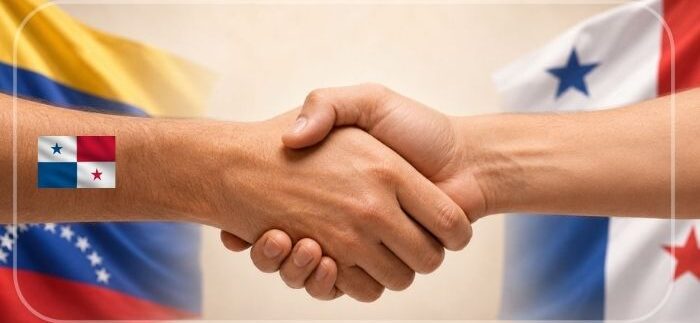
Panama spent this week hosting presidents and diplomats for the Bicentennial of the Anfictiónico Congress. By Wednesday night, the country had shifted into a different kind of regional role, one built around collection centers, rescue teams, and a president speaking from a convention podium about solidarity rather than ceremony.
Two earthquakes struck north-central Venezuela within 39 seconds of each other on the evening of June 24, a sequence the US Geological Survey classified as a rare seismic doublet. The main event registered magnitude 7.5, preceded by a 7.2 tremor, with the epicenter located near Yaracuy state. By Thursday afternoon, Venezuelan authorities had confirmed more than 164 deaths and over 1,500 injuries, figures officials cautioned would likely rise as search and rescue operations continued through collapsed buildings in Caracas, La Guaira, and Carabobo. The Simón Bolívar International Airport in Maiquetía, which serves the capital, closed after sustaining structural damage.
Panama’s response came quickly and through more than one channel. President José Raúl Mulino posted his message of support on social media the same night, writing that Panama once again offers its humanitarian help to sister nations. By Thursday, he had moved from words to logistics, announcing during the Bicentennial conference at the Atlapa Convention Center that he had instructed the National Civil Protection System (Sinaproc) to organize a rescue mission for Venezuela as soon as possible. Sinaproc director Omar Smith said his teams were already coordinating routes and setting up official collection points, with priority given to channeling aid toward the hardest-hit areas.
Mulino also opened Parque Omar’s Casa Club as a citizen donation site, a detail that matters because it gives ordinary Panamanians, not just government agencies, a direct way to participate. That instinct, turning a public park into a relief hub within hours of a disaster on a different continent, says something about how the country tends to respond to regional emergencies. It is the same posture Panama showed years earlier when Sinaproc and the Casa Club at Parque Omar served as a domestic collection point during flooding in the country’s interior. The infrastructure for civic generosity already existed. The earthquake simply gave it a new address.
The Panamanian Red Cross moved in parallel, opening its own collection point at the Gladys Vidal Theater inside the Hatillo Building, while the Panama City Mayor’s Office launched a separate “Todos con Venezuela” campaign at the same location. Supermarket chain Riba Smith turned its branches nationwide into drop-off sites, and a group of Costa del Este residents organized an independent collection point at the Este Sport Center parking area, asking specifically for bottled water, baby formula, hygiene products, and shelter materials like tarps and blankets, while explicitly declining used clothing or footwear donations.
The commercial disruption arrived almost as fast as the solidarity. Copa Airlines, whose hub at Tocumen International Airport makes it the dominant carrier between Panama and Venezuela, suspended all flights to Caracas, Barquisimeto, Valencia, and Barcelona, offering affected passengers fee-free date changes and refunds. The airline said it intends to resume service as soon as conditions allow, a decision that depends on the progressive reopening of Venezuelan airport infrastructure rather than anything Panama controls on its end.
Panama’s Foreign Ministry activated its Information Coordination Center to track Panamanian citizens in Venezuela and opened a dedicated consular emergency line. The Panamanian Red Cross separately enabled its Restoring Family Links program, the same mechanism the global Red Cross and Red Crescent network uses after disasters worldwide, for people trying to locate relatives whose contact has been lost since the quake.
None of this exists in isolation. El Salvador’s Nayib Bukele announced 300 rescuers and 50 tons of equipment ready to depart. Colombia sent more than 60 specialists with four canine units. Germany offered military transport planes, Spain pledged emergency assistance, and the United Nations deployed task forces to the ground. Panama’s contribution is smaller in scale than some of these, but it carries particular weight given the country’s geographic and historical ties to Venezuela and the volume of Venezuelan migration that has passed through Panama in recent years.
For a country that spent the same week showcasing its role as a hub for hemispheric diplomacy, the timing carries its own quiet irony. The conversations happening inside Atlapa about governance, cooperation, and shared challenges among American nations found their most immediate test not in a conference session, but in how fast a park could be turned into a place where neighbors bring water, canned food, and flashlights for people they have never met.
5 Things You Should Know
-
How can I donate in Panama right now? The two main physical collection points in Panama City are the Casa Club at Parque Omar, open Thursday through Saturday, and the Gladys Vidal Theater inside the Hatillo Building, run by the Panama City Mayor’s Office under the “Todos con Venezuela” campaign, open Wednesday through Friday. Riba Smith supermarkets nationwide are also accepting drop-offs during regular store hours.
-
What items are most needed? Organizers are asking for bottled water, non-perishable food such as rice, pasta, oats, canned goods, and powdered milk, baby formula, basic first aid supplies, hygiene products, flashlights, batteries, blankets, and shelter materials like tarps. Most collection points are specifically asking donors not to bring used clothing or footwear.
-
Can I donate money instead of physical goods? Yes. The Panamanian Red Cross accepts monetary donations directly through its website, with preset amounts starting at five dollars or the option to enter a custom amount. For contributions of $10,000 or more, the organization asks donors to call its office directly at (+507) 315-1388 or 315-1389.
-
Is Panama sending rescue personnel, not just donations? Yes. President Mulino instructed Sinaproc to organize and deploy a rescue mission to Venezuela, joining international teams already on the ground from Colombia, El Salvador, and United Nations task forces.
-
Can I still fly to Venezuela from Panama? Not at the moment. Copa Airlines suspended all flights to Caracas, Barquisimeto, Valencia, and Barcelona following damage to Venezuelan airport infrastructure, including Maiquetía’s Simón Bolívar International Airport. The airline is offering fee-free rebooking and refunds and says it will resume service once conditions allow.