Panama and the Philippines Look to Build a New Trade Bridge
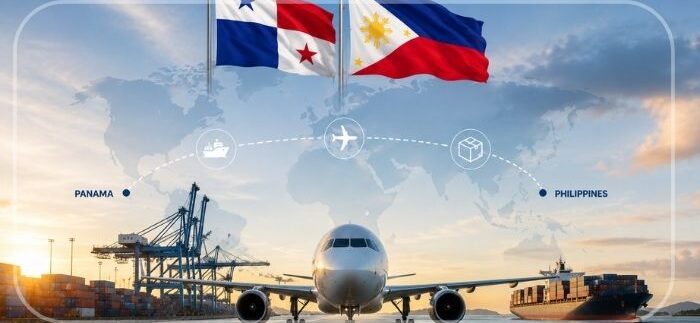
Panama and the Philippines are working on a commercial agenda designed to connect Southeast Asian production with markets across Latin America.
During a meeting with the Philippine Chamber of Commerce and Industry, Panama’s foreign minister, Javier Martínez-Acha, and PCCI president Ferdinand “Perry” Ferrer agreed to pursue stronger bilateral trade, investment and logistics ties. The proposed roadmap includes encouraging Asian companies to establish regional operations in Panama and use the country as a platform for distribution across the Americas.
The agreement comes as global companies continue to reassess supply chains and seek alternatives that reduce distance, risk and dependence on a single market. The Philippines brings manufacturing, technology, electronics, business services and a large consumer economy. Panama brings something different: the infrastructure to move goods, capital and companies between regions.
Its ports on two oceans, the Panama Canal, the Colón Free Zone and regional air connectivity allow companies to reach multiple Latin American markets from one operating base. For Philippine businesses, that could make Panama less of a final destination and more of a distribution point.
Trade between the two countries remains relatively small, but it is growing. Panama’s exports to the Philippines increased from approximately $19.7 million in 2024 to $24.9 million in 2025, an increase of roughly 27%.
The more important opportunity, however, may be investment rather than direct bilateral trade. Philippine manufacturers and logistics companies could use Panama for warehousing, regional headquarters, re-export operations and access to nearby markets.
Panama has made similar arguments to other Asian economies for years. The difference now is that supply-chain diversification has become a boardroom priority, particularly for companies seeking stronger links between Asia and the Western Hemisphere.
A commercial corridor will not emerge from one meeting. It will require shipping connections, private-sector participation, trade promotion and concrete investment commitments. But the logic is clear: the Philippines produces for global markets, while Panama has built an economy around connecting them.
5 Things to Know
-
A new trade roadmap is in the works.
Panama and the Philippines agreed to a commercial agenda aimed at strengthening trade, investment, and logistics ties between the two nations.
-
Panama aims to be the regional distributor.
The plan encourages Philippine companies to set up regional operations in Panama to distribute goods across the Americas.
-
Supply-chain diversification is driving the push.
As global companies seek alternative trade routes, Panama’s infrastructure offers a solution for connecting Asian manufacturing with Latin American markets.
-
Investment takes priority over direct trade.
While exports are growing, the primary opportunity lies in Philippine firms using Panama for warehousing, regional HQs, and re-export platforms.
-
Private-sector action will determine success.
Turning the agreement into a reality will depend on shipping connections, private investments, and concrete business commitments.