Panama Enters a New Cycle of Urban Mobility Investment
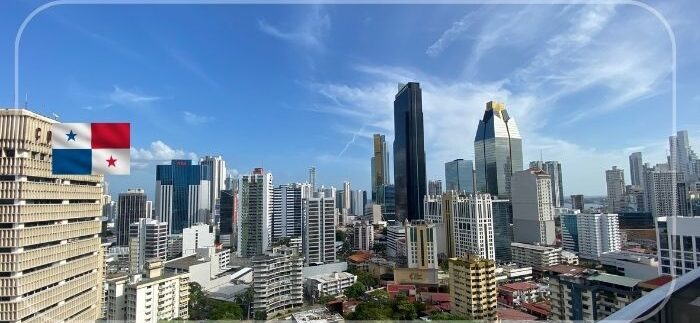
If you have spent time in Panama City, you know how much daily life depends on a handful of major roads. Corredor Sur, Corredor Norte and Corredor Este are the city’s main toll highways, while Vía España is one of the capital’s most important urban avenues, connecting several dense residential and commercial districts.
All of them are now entering a new phase of expansion and modernization.
Upgrading the Corredor Highway Network
The most significant project is the $300 million expansion of Corredor Sur, the toll highway that connects Punta Pacífica and the eastern side of Panama City with Tocumen International Airport. The plan includes additional lanes, wider shoulders, new interchanges and a marine bridge near Punta Pacífica, with completion currently targeted for 2029.
ENA, the state-owned company that operates the toll-road network, has also announced modernization plans for Corredor Norte and Corredor Este. These plans include new ramps, bridges, access points and smart traffic-management technology. The goal is not only to increase capacity, but to improve how the city’s main residential, business and airport corridors connect with each other.
Redesigning Vía España for Pedestrians and Transit
At the same time, Vía España, one of Panama City’s most heavily traveled urban avenues, is being redesigned with a stronger focus on public transport and pedestrian mobility. The government is investing roughly $80 million in a 5.4-kilometer section between Avenida Porras and Avenida Cincuentenario.
This redesign will add expanded dedicated Mi Bus lanes, wider sidewalks, drainage improvements and broader urban upgrades along the corridor.
What This Means for Real Estate and Urban Growth
These projects are part of a much larger infrastructure cycle. The Ministry of Public Works reports its 2026 portfolio includes more than $1.2 billion across 35 road projects nationwide, while Tocumen International Airport is separately advancing a major expansion program.
For residents, the benefit is straightforward: better roads, more reliable transport and fewer bottlenecks. For businesses and real estate investors, the implications are broader because infrastructure fundamentally changes how people move through a city and value different neighborhoods.
Improved access to Tocumen can strengthen areas along the eastern corridor. Better connections around Punta Pacífica and Costa del Este will support established districts, while upgrades along Vía España can improve mobility across neighborhoods such as San Francisco, Río Abajo, Parque Lefevre and Pueblo Nuevo.
Taken together, these projects point to a clear direction: Panama is investing in the roads, public transport and airport connections needed to support its next stage of urban growth.
5 Things to Know
-
$300 million is being invested in Corredor Sur. The highway expansion between Punta Pacífica and Tocumen includes new lanes, interchanges, and a marine viaduct targeted for 2029 completion.
-
Vía España is receiving an $80 million upgrade. A 5.4-kilometer stretch will feature expanded dedicated bus lanes, wider sidewalks, and major drainage improvements.
-
National road infrastructure funding exceeds $1.2 billion. The Ministry of Public Works is advancing 35 major road projects across the country as part of its 2026 portfolio.
-
All major toll corridors are being modernized. ENA is implementing new access ramps, bridges, and smart traffic-management technology across Corredor Norte, Sur, and Este.
-
Real estate accessibility will see widespread gains. Key neighborhoods including Punta Pacífica, Costa del Este, San Francisco, and Parque Lefevre stand to benefit from reduced travel times.