Panama Builds an Ecological Highway to the Caribbean
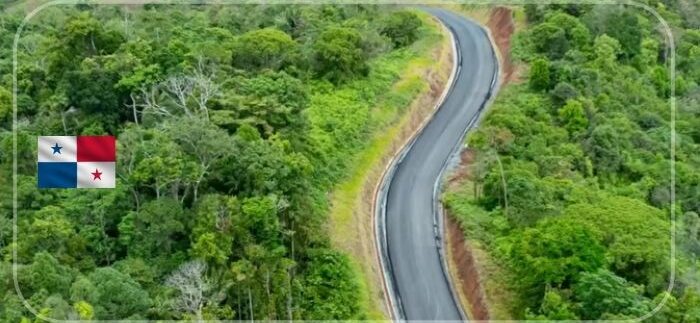
Infrastructure projects usually announce themselves in familiar terms: faster routes, lower travel times, better access. Panama’s new Corredor del Caribe suggests a different ambition.
Planned as the country’s first ecological highway, the project will improve access to the Caribbean coast through Colón, while placing environmental preservation at the center of the design. Roads tend to open territory. This one is also being designed to protect it.
Colón is one of Panama’s most strategic regions, long tied to logistics, trade, and the Canal, but also home to one of Panama’s most compelling and underappreciated coastlines. What makes the Caribbean side particularly interesting is its proximity to Panama City. In a relatively short drive, the capital gives way to a very different landscape of tropical coastline, lower density, and a more untouched atmosphere than what many buyers associate with the wider Caribbean.
The Corredor del Caribe begins to change that. Wildlife crossings, reduced speed limits, and restrictions on heavy vehicles point to a project designed not simply to move cars more efficiently, but to avoid eroding the ecological value that makes the area attractive in the first place.
Today’s buyer is still drawn to coastline, privacy, and natural beauty, but is also paying closer attention to how a destination is being built. In that sense, projects like this carry added value because they suggest a more sustainable approach to access, one that protects the landscape rather than simply cutting through it.
Along the Caribbean side, the investment case is beginning to come into clearer focus.
It offers something increasingly rare: a coastline within reach of a major capital city, in a dollarized economy, with the potential to evolve without losing its natural character. If that balance can be maintained, the long-term appeal of the region becomes easier to imagine.
For future coastal development in Colón, this kind of infrastructure sends the right signal. It suggests a road to the Caribbean, but not at the cost of the landscape itself. In a market where so many waterfront destinations have been overbuilt or poorly connected, that restraint may prove to be one of Panama’s advantages.
The country has long known how to build for movement.
What makes this project interesting is that it is also trying to build for permanence.